Lyme disease, science, and society: Camp Other
Showing posts with label herbs. Show all posts

Thursday, April 12, 2012

0 Commentary: Antibiotics Are Only One Tool - I Want Others.

A few weeks ago, I commented on a Wall Street Journal blog post about chronic Lyme disease. Since then, I have been reflecting on this response to my comments there:
"Camp Other – The cure for chronic Lyme is known. If you want a sustainable, long term cure, you can gamble on long term antibiotics, or can you take an alternative approach, which consists of doing between 20 and 50 different things, including Low Dose Naltrexone. Yes, they get you to a cure, at which point a good alkaline diet, oxygenation, vitamin D, etc etc etc should maintain health.
 Easier said than done though. Even when you cure your Lyme, you need to maintain the healthy diet, and some of the supplements that got you there. You also want to do genetic testing for things like methylation, as part of treament and post-cure maintenance. I’m certainly not banking on the Viral Genetics research. It could be many years before that turns into a drug we could take. I already know people who are fully cured and back to their old lives, so it is curable with current knowledge."
And I also sadly know people who are not fully cured with current knowledge.

Reflecting on this, it's not an easy statement for me to make - but I don't think the cure for chronic Lyme disease is entirely known.

If it were known, then all the patients I know would have had the treatment they needed and would be better now. But some of them are not. And I don't think it's some personal failing that they aren't or that they haven't done the right things - it's that their individual condition is different and may require different treatment - including treatments which haven't even been developed yet.

I can see that long term antibiotics, some alternative medicine, or some combination of the two have helped a number of people improve their condition and alleviate symptoms. Many have gotten their old life back. But it's never been guaranteed that any of these treatments will work for everyone.

 Even the Lyme disease patient support groups have often repeated the statement, "Every patient is different," and Polly Murray herself stated in her book, The Widening Circle:
"I am struck by how Lyme disease never seems to act exactly the way it is supposed to, how each individual seems to respond differently to the spirochete."
I'm a fairly pragmatic person, so my basic position on using antibiotics to treat persisting symptoms related to Lyme disease has been that if they might offer relief and improve your quality of life, if nothing else has helped, and a doctor has agreed to this treatment - then try them. Use them, while being aware that there are risks in taking them longer term - and note that perhaps there are even unforeseen consequences of which scientists are not yet aware.

But while I've been an advocate for the use of longer than standard courses of antibiotics in the subset of patients with Lyme disease who have persisting symptoms and I feel they saved my life, I have never wanted that to be the end of the story. Because it seems to me that even if they do help, if they don't cure everyone then more research is needed for effective treatment which helps all patients.

If there is evidence that comes out of Embers' Rhesus Macaque study - along with others - that Borrelia burgdorferi s.l. does have a persister cell phenotype as part of its pathogenesis, then more antibiotics may only be a maintenance treatment at best. What would really be needed is a treatment which reactivates the dormant persisters and kills them - something which antibiotics alone cannot do.

Persister cells are tolerant to antibiotics. So in theory, it may be that antibiotics of some kind plus a metabolite would be needed to eradicate any remaining spirochetes.

In the long run, I'd like to see more effective, less expensive treatments of shorter duration for my condition.

I'd like to avoid taking antibiotics out of concern for my poor digestive system and my palate, which is disgusted with bitter tasting substances rolled into barely swallowable pills in general.

I'd like to avoid the strange side effects which I have experienced which, thankfully, in most cases abated after the first week or two of treatment - yet they inexplicably seemed to be those which are less common to experience and more difficult to cope with.

Antibiotics are great tool and have helped a great number of people - and they have helped me, too. But I think it's time to look past long term antibiotics alone and push for research on other avenues of treatment.

Researching them doesn't mean abandoning antibiotic use entirely - they are scientifically proven effective against Lyme disease and its coinfections. Researching other avenues means investigating what else can be done to help patients improve their quality of life and to find something that could cure them in less time. It means exploring more options, not fewer. It means more patient freedom, not less.

 If at one point I seemed to strongly advocate Viral Genetics' VGV-L candidate for the treatment of chronic Lyme disease, it isn't because I am certain it will work. I don't know for sure that it will. I am hoping, though, that it will help at least some portion of those of us suffering and will not have serious side effects.

And I'm hoping it marks the beginning of more research into different ways to treat patients who are suffering with persistent symptoms. The antibiotics will still be there if you need them - and after how much of them I've already consumed, I'd rather not need them. I'd like to try something else if I can. A round of Buhner's herbs, perhaps - or perhaps something entirely new.


Read More

Friday, April 22, 2011

0 The Friday Four

In this week's Friday Four, we'll look at antimalarial trees that are threatened with extinction but may yet be saved to make natural medicine, how our own bacteria use immune cells to help save us from bad infections, a six-fold risk of death from C. diff in patients with IBD, and genetically engineering mosquitoes so that they have less ability to spread disease.


1) Antimalarial trees in East Africa threatened with extinction

Source link: http://www.sciencedaily.com/releases/2011/04/110420211758.htm

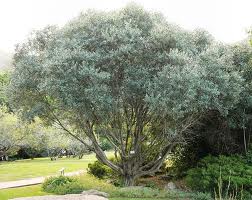
Olea europaea Africana -
African wild olive - antimalarial tree
ScienceDaily (2011-04-21) -- Research released in anticipation of World Malaria Day finds that plants in East Africa with promising antimalarial qualities -- ones that have treated malaria symptoms in the region's communities for hundreds of years -- are at risk of extinction. Scientists fear that these natural remedial qualities, and thus their potential to become a widespread treatment for malaria, could be lost forever.

Comments:

According to this article, researchers at the World Agroforestry Centre (ICRAF) and the Kenya Medical Research Institute (KEMRI), Common Antimalarial Trees and Shrubs of East Africa, are documenting and studying 22 of the region's malaria-fighting trees and shrubs which have been found to be antimalarial by both traditional medicinal practitioners and scientists.

Time is running out for these trees, though, because of deforestation and overexploitation for medical use without replacing the trees and cultivating new ones, but scientists are preserving them in a genebank as well as a nursery.

Here is one thing I want all alternative medicine lovers to be aware of, and it saddens me, too. The article states:
"Today, the world's newest, most-effective therapeutic treatment for malaria also comes from a plant, the Artemisia annua shrub. However, access to malaria therapies based on artemisinin compounds remains low -- around 15 percent in most parts of Africa and well below the World Health Organizations' 80 percent target. Additionally, the malaria parasite's ability to resist artemisinin is already beginning to emerge in Southeast Asia."
Here is our note of humility, humanity...

Mother Nature is in charge. She always was, and we will be one step behind her. Get a bacterial infection, then take an antibiotic, then the bacteria grows resistant to the antibiotic. Get an infection, then take an herb, then the bacteria grows resistant to the herb, too.

It's evolution in action, and there's nothing we can do to stop it. All we can hope to do is keep up, and try to maintain balance. But Mother Nature is crafty. Beautiful, mysterious, and creative, and has many tricks up her sleeve.

So just because it's an herb doesn't mean a parasite or bacteria won't develop resistance to it.

This aside: I really hope these scientists can protect and save as many of these trees as they can from destruction. It sounds like they are working hard on this problem. If they do, they may have in their hands future treatments for not only malaria but babesia, too.

Additional Sources:
http://www.worldagroforestrycentre.org/
http://www.kemri.org/

2) Learning to tolerate our microbial self: Bacteria co-opt human immune cells for mutual benefit

Source link: http://www.sciencedaily.com/releases/2011/04/110421141632.htm

B. fragilis
ScienceDaily (2011-04-22) -- The human gut is filled with 100 trillion symbiotic bacteria which we blissfully live with, although they have many features similar to infectious bacteria we react against. What decides whether we ignore -- or fight? In the case of a common "friendly" gut bacterium, Bacteroides fragilis, researchers have discovered the surprising answer: The decision is not made by us, but by the bacteria, which co-opt cells of the immune system for our benefit ... and theirs.

Comments:

So these scientists discovered that these friendly bacteria in mice, B. fragilis, can control regulatory T-cells in their immune system. These T-cells, by the way, are what protects our immune systems from attacking our own cells - they are basically anti-autoimmune cells.

B. fragilis can "trick" the immune system into activating these regulatory T-cells so they themselves will not get attacked.

How does this happen? The bacteria produces a molecule that receptors (called Toll-like receptors) on the regulatory T-cells pick up. When these regulatory T-cells get this "message", they suppress T helper 17 cells. By shutting those cells down, the bacteria is able to colonize the intestines.

This is not usually how Toll-like receptors are thought of - they are thought of as being part of a chain of communication in the immune system that works to get rid of bacteria - not keep it alive.

Question to my readers: What is the relationship between Toll-like receptors and Borrelia burgdorferi in people?

I'll give you time to research it if you don't know the answer, and will tell you next week.

Original Reference:
June L. Round, S. Melanie Lee, Jennifer Li, Gloria Tran, Bana Jabri, Talal A. Chatila, and Sarkis K. Mazmanian.The Toll-Like Receptor 2 Pathway Establishes Colonization by a Commensal of the Human MicrobiotaScience, 21 April 2011 DOI:10.1126/science.1206095

3) C. difficile increases risk of death 6-fold in patients with inflammatory bowel disease

Source link: http://www.eurekalert.org/pub_releases/2011-04/icl-cdi041911.php

Patients admitted to hospital with inflammatory bowel disease face a sixfold greater risk of death if they become infected with Clostridium difficile, a new study has found.

Comments:

The It-Could-Be-Worse News: A review published in 2010 estimated the overall mortality rate for patients with C. difficile to be 6 per cent.

Okay, 6%. I rather it'd be 0%, but 6% is a relatively small number compared to the rate of fatalities for other conditions.

The Bad News: Those most severely ill and the elderly are in a high risk for fatality from a nasty C. diff infection.

That's not good.

The Worst News: The mortality rate for IBD patients with C. difficile at 30 days was 25 per cent, compared with 3 per cent for patients with IBD alone.

25%. That's really not good.

I really don't know what to say to this other than it's scary. I hope research finds a way to prevent and cure IBD, and that we can prevent and more effectively treat C. difficile infections.

My advice:

1) Take your probiotics if you are using antibiotics. Eat yogurt  and/or take probiotics 3 hours after and before taking antibiotics daily.

2) Take Saccharomyces boulardii. There is some evidence it stops C. diff infections.

3) Avoid taking antibiotics unless it's absolutely necessary.

4) Get evaluated for Inflammatory Bowel Disease if you suspect you have it.

This not something to mess around with.

Original Reference:
 J.A. Karas et al. A review of mortality due to Clostridium difficile infection. Journal of Infection (2010) 61, 1-8.

4) 'Disease-Proof Mosquito' Could Spread Like Wildfire

Source link: http://news.sciencemag.org/sciencenow/2011/04/disease-proof-mosquito-could-spr.html

Scientists have identified several mosquito genes that, when tinkered with, decrease the mosquitoes' ability to transmit a virus or a parasite; they have also given the insects new genes that do the same.

My only comment for this is: Will we ever see a tick that is bred to not spread Lyme disease bacteria and coinfections? 

Is there anything beneficial in having any of these hosts carry these infections for anyone but the pathogenic agents? Any whatsoever at all?

No?

Then stop these pathogens in their tracks, please.
Read More

Saturday, April 9, 2011

4 Artemisinin and cancer

Yeah, I know, I usually don't post on the weekend... well, here I am - but only for a few minutes.

I keep tripping over that Friday Four article I posted on using artemisinin to treat leukemia cells.

I wanted to see more of the research that's out there, and I found this:

Synthesis and anti-cancer activity of covalent conjugates of artemisinin and a transferrin-receptor targeting peptide. Steve Oha, Byung Ju Kim, Narendra P. Singh, Henry Lai, Tomikazu Sasaki. Cancer Letters. Volume 274, Issue 1, Pages 33-39 (8 February 2009)
Source link:http://www.cancerletters.info/article/S0304-3835(08)00668-X/abstract

Effects of artemisinin-tagged holotransferrin on cancer cells
Henry Lai, Tomikazu Sasakib, Narendra P. Singha and Archna Messay
Department of Bioengineering, Box 357962, University of Washington, Seattle, WA 98195-7962, USA Department of Chemistry, University of Washington, Seattle, WA, USA
Received 2 August 2004. Accepted 25 August 2004. Available online 23 November 2004.
Link to above abstract

Apparently Henry Lai did previous research on the use of artemisinin on cancer, in which the earlier abstract states:
"Artemisinin reacts with iron to form free radicals that kill cells. Since cancer cells uptake relatively large amount of iron than normal cells, they are more susceptible to the toxic effect of artemisinin. In previous research, we have shown that artemisinin is more toxic to cancer cells than to normal cells. In the present research, we covalently attached artemisinin to the iron-carrying plasma glycoprotein transferrin. Transferrin is transported into cells via receptor-mediated endocytosis and cancer cells express significantly more transferrin receptors on their cell surface and endocytose more transferrin than normal cells. Thus, we hypothesize that by tagging artemisinin to transferrin, both iron and artemisinin would be transported into cancer cells in one package."
More recent research that was not done by Lai includes this study on using artemisinin to treat prostate cancer:

Effect of artemisinin derivatives on apoptosis and cell cycle in prostate cancer cells.
Morrissey, Colma; Gallis, Byronb; Solazzi, Jeffrey W.a; Kim, Byung Juc; Gulati, Romane; Vakar-Lopez, Fundad; Goodlett, David R.b; Vessella, Robert L.af; Sasaki, Tomikazu. Anti-Cancer Drugs: April 2010 - Volume 21 - Issue 4 - pp 423-432
Source Link: http://journals.lww.com/anti-cancerdrugs/Abstract/2010/04000/Effect_of_artemisinin_derivatives_on_apoptosis_and.9.aspx

An excerpt from the above abstract states:
"Artemisinin is a plant-derived anti-malarial drug that has relatively low toxicity in humans and is activated by heme and/or intracellular iron leading to intracellular free radical formation. Interestingly, artemisinin has displayed anti-cancer activity, with artemisinin dimers being more potent than monomeric artemisinin. Intracellular iron uptake is regulated by the transferrin receptor (TfR), and the activity of artemisinin depends on the availability of iron."

I also found an entire chapter of a book devoted to the study of artemisinin and how it affects pathogens and cancer:

Chapter 18: The Anti-Infective and Anti-Cancer Properties of Artemisinin and its Derivatives. Christopher Paul Hencken, Alvin Solomon Kalinda and John Gaetano D’Angelo. Annual Reports in Medicinal Chemistry. Volume 44, 2009, Pages 359-37
Link (doi): doi:10.1016/S0065-7743(09)04418-2

These are only a few examples of research being done out there on artemisinin for cancer... Seems there is an increasing interest in it. I still want to do a little more digging to see where that claim about artemisinin came from Henry Lai: "It's 100 times more specific than traditional chemotherapy. In breast cancer, it's even better."

Specificity in cancer treatment would improve treatment so much and improve the odds of surviving it with fewer side effects. So I'd really like to know more about this.

Artemisinin. It's not just for Malaria and Babesia any more.
Read More

Thursday, March 3, 2011

3 The Friday Four

In this issue of the Friday Four: USDA studies on herbal tea, how bacteria uses nanotubes to communicate and cause antibiotic resistance, studying white blood cells and mechanisms to eliminate inflammation after infections, and a study suggests ALS may be caused by a retrovirus.


1) In The Something We Knew All Along Department: Herbal Teas May Provide Health Benefits

Those who enjoy the caffeinated lift that comes from drinking traditional coffees and teas may tend to overlook the benefits of drinking herbal infusions. Now, as explained in this month's issue of Agricultural Research magazine, the idea that herbal teas may provide a variety of health benefits is no longer just folklore.

ScienceDaily. Retrieved March 3, 2011,
from http://www.sciencedaily.com­/releases/2011/03/110301122055.htm

Original Source Publication: USDA/Agricultural Research Service (2011, March 2). Herbal teas may provide health benefits.


2) Bacteria Can Communicate With Each Other Through Nanotubes, Researchers Discover

A pathway whereby bacteria communicate with each other has been discovered by researchers at the Hebrew University of Jerusalem. The discovery has important implications for efforts to cope with the spread of harmful bacteria in the body.

ScienceDaily. Retrieved March 3, 2011,
from http://www.sciencedaily.com­ /releases/2011/03/110302080003.htm

Original Source Publication:
Gyanendra P. Dubey, Sigal Ben-Yehuda. Intercellular Nanotubes Mediate Bacterial Communication. Cell, 2011; 144 (4): 590 DOI: 10.1016/j.cell.2011.01.015


3) How Much Can a Cell Uptake? On White Blood Cells and Healing from Inflammation

Immunological research at the University of Haifa, Israel, has made a new breakthrough, revealing a critical component in the "decision-making" process of white blood cells that play a role in the healing process from bacterial inflammation. "The process that we have discovered can assist in the development of drugs that are based on the natural processes that take place in the human body, unlike most of the existing drugs that attempt to curb inflammation by artificial means," explains Dr. Amiram Ariel of the Department of Biology at the University of Haifa, who headed the study.

ScienceDaily. Retrieved March 11, 2011,
from http://www.sciencedaily.com­ /releases/2011/03/110302101656.htm

Original Source Publication:
Sagie Schif-Zuck, Nufar Gross, Simaan Assi, Ran Rostoker, Charles N. Serhan, Amiram Ariel. Saturated-efferocytosis generates pro-resolving CD11blow macrophages: Modulation by resolvins and glucocorticoids. European Journal of Immunology, 2011; 41 (2): 366 DOI: 10.1002/eji.201040801


4) Amyotrophic Lateral Sclerosis (ALS) Could Be Caused by a Retrovirus, Study Suggests

A retrovirus that inserted itself into the human genome thousands of years ago may be responsible for some cases of the neurodegenerative disease amyotrophic lateral sclerosis (ALS), also known as Lou Gherig's disease. The finding, made by Johns Hopkins scientists, may eventually give researchers a new way to attack this universally fatal condition.


ScienceDaily. Retrieved March 3, 2011,
from http://www.sciencedaily.com­/releases/2011/03/110302121911.htm

Original Source Publication:
Renée Douville, Jiankai Liu, Jeffrey Rothstein, Avindra Nath. Identification of active loci of a human endogenous retrovirus in neurons of patients with amyotrophic lateral sclerosis. Annals of Neurology, 2011; 69 (1): 141 DOI: 10.1002/ana.22149
Read More

The Camp Other Song Of The Month


Why is this posted? Just for fun!

Get this widget

Lyme Disease

Borrelia

Bacteria

Microbiology